
Solar System Prices Drop in Pakistan 2026
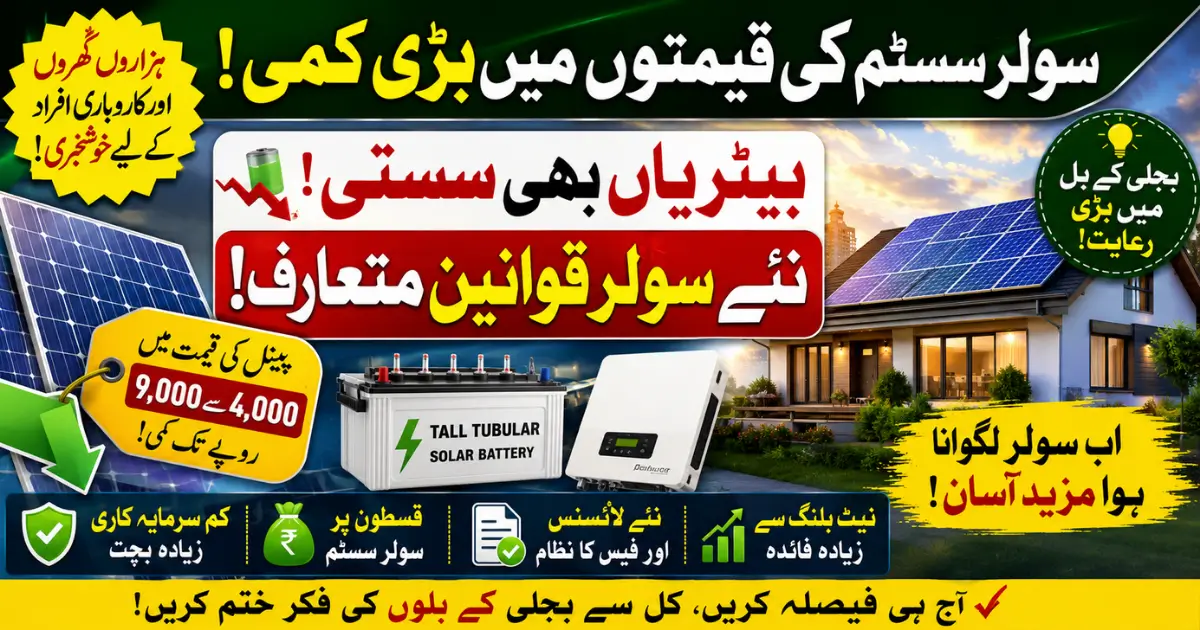
Solar System Prices Drop in Pakistan 2026. Pakistan’s solar energy market is going through a major change in 2026. The prices of solar panels have dropped significantly, while battery costs are also expected to decrease in the coming months. These developments are providing relief to thousands of households and businesses looking for affordable ways to reduce their electricity bills.
At the same time, the government has introduced new regulations for solar users, including updated licensing requirements for certain solar installations. Along with falling equipment prices and new financing opportunities, these changes are expected to increase the adoption of solar energy across the country.
Green Property Certificate Punjab 2026: Complete Guide to the New Land Record System Replacing Fard
Solar Panel Prices See Significant Reduction
One of the biggest developments in Pakistan’s renewable energy sector is the reduction in solar panel prices. Market reports indicate that solar plate prices have fallen by approximately Rs 4,000 to Rs 9,000 depending on the brand, quality, and capacity.
This price reduction has made solar systems more affordable for middle-class families and small businesses. Many consumers who previously delayed installation due to high costs are now reconsidering solar energy as a practical solution.
Industry experts believe that lower transportation costs and reduced fuel prices have contributed to this decline. If market conditions remain stable, prices may decrease even further during the coming months.

Falling Fuel Prices Are Supporting the Solar Market
The recent reduction in petroleum product prices has had a positive impact on several industries, including the solar sector. Transportation plays an important role in the supply chain of solar panels, batteries, and installation equipment.
As fuel costs decrease, importers and distributors can move products at lower expenses. This helps reduce the final price paid by consumers.
The benefits of lower fuel prices include:
- Reduced transportation costs
- Lower installation expenses
- More affordable solar equipment
- Better profit margins for suppliers
- Increased demand for solar systems
These factors are helping create a more favorable environment for solar energy adoption in Pakistan.
Battery Prices Expected to Fall Further
Batteries are a crucial component of many solar systems because they store electricity for use during nighttime and power outages. Over the past year, battery prices increased sharply due to rising production and transportation costs.
According to market sources, battery prices had increased by Rs 27,000 to Rs 38,000 in some categories. However, experts now expect battery prices to gradually decline as fuel costs continue to decrease.
Lower battery prices are especially important for consumers who want hybrid or off-grid solar systems. These systems rely heavily on battery storage to provide uninterrupted power.
Pakistan Govt Announces Two Public Holidays for Ashura 2026
Why Lower Solar System Costs Matter for Consumers
The reduction in solar panel and battery prices is more than just a market update. It directly affects the financial decisions of consumers who are dealing with rising electricity bills.
A lower installation cost means homeowners can recover their investment faster. In many cases, families can reduce their monthly electricity expenses significantly after switching to solar power.
Some key benefits include:
- Lower electricity bills
- Faster return on investment
- Reduced dependence on the national grid
- Protection from future tariff increases
- Long-term energy savings
As solar technology becomes more affordable, it is expected to become a preferred energy solution for many Pakistani households.
New Solar Licensing Rules Introduced in 2026
While equipment prices are decreasing, the government has also introduced new solar regulations. Under the latest amendments by the Power Division, certain consumers installing solar systems will now need a license approved by the relevant authorities.
Previously, licenses for solar systems up to 25 kilowatts were generally provided without significant charges. The updated rules introduce additional requirements and fees for some consumers.
The objective of these regulations is to improve system monitoring, maintain safety standards, and ensure better management of electricity generation within the national power network.
Consumers planning new solar installations should stay informed about these requirements before starting their projects.
Additional Charges and Requirements for Solar Users
Under the revised framework, consumers may be required to submit a pay order and licensing fee depending on the size of their solar installation.
Reports suggest that an additional fee of around Rs 1,000 per kilowatt could apply in certain cases. The exact amount may vary according to the system’s capacity and category.
Before investing in a solar system, consumers should:
- Confirm licensing requirements
- Understand applicable fees
- Verify installation approvals
- Consult certified solar companies
- Review net billing eligibility
Taking these steps can help avoid delays and unexpected costs during the installation process.
Net Billing Projects Offer New Opportunities
One positive aspect of the new solar policy is the availability of net billing arrangements. These systems allow consumers to make better use of the electricity generated by their solar panels.
Net billing helps improve energy management and allows users to maximize the value of their solar investment. It also supports the country’s broader goal of increasing renewable energy adoption.
Benefits of net billing include:
- Efficient use of generated electricity
- Better energy management
- Increased value of solar investment
- Reduced pressure on the national grid
- Support for clean energy growth
As more consumers adopt solar technology, net billing is expected to play an important role in Pakistan’s energy future.
Sindh Government Announces Solar Installment Plan
A major boost for solar adoption comes from the Sindh government’s newly announced Solar Installment Plan. The initiative is designed to help middle-class families install solar systems without paying the full cost upfront.
Under this plan, consumers can pay monthly installments equal to their existing electricity bills. For example, a family currently paying Rs 25,000 per month in electricity charges can use the same amount as a solar installment payment.
This innovative approach makes solar energy more accessible and removes one of the biggest barriers faced by consumers—the high initial investment cost.
Who Blocked You on WhatsApp? A Secret Trick That May Help You Find Out
Future of Solar Energy in Pakistan Looks Promising
The future of Pakistan’s solar industry appears bright. Falling solar panel prices, expected reductions in battery costs, supportive government initiatives, and growing public awareness are all contributing to market growth.
Energy experts believe that solar power will continue to expand rapidly over the next few years. Rising electricity tariffs are encouraging consumers to seek alternative energy sources, and solar energy remains one of the most practical options available.
From residential rooftops to commercial installations, solar systems are becoming an increasingly common sight across Pakistan. As technology improves and prices continue to fall, even more people are expected to make the switch.
Conclusion
The drop in solar panel prices and the expected reduction in battery costs have created a positive outlook for Pakistan’s renewable energy sector in 2026. Consumers now have an opportunity to invest in solar energy at a lower cost while reducing their dependence on expensive grid electricity.
At the same time, new solar licensing regulations and net billing opportunities are reshaping the way solar systems operate in the country. The introduction of the Sindh Solar Installment Plan further strengthens the case for solar adoption by making it affordable for middle-class families.
With lower equipment prices, flexible financing options, and increasing awareness about renewable energy, solar power is becoming a smart and practical choice for households and businesses across Pakistan. The coming years are likely to see even greater growth in the country’s solar energy market, helping consumers save money while supporting a cleaner and more sustainable future.